Bedding · Sustainable sleep
How to Choose an Organic Cotton Mattress Pad for Everyday Protection
A mattress pad can add a little cushioning, help shield your mattress from routine wear, and make the bed feel more inviting. If you’re considering organic cotton, look beyond the label: the fill, cover, fit, care instructions, and certification all shape how useful—and easy to live with—the pad will be.
Published October 15, 2026
Some bedding choices announce themselves the moment you climb into bed. A mattress pad is quieter about its role. It sits beneath the fitted sheet, adding a soft, often quilted layer between you and the mattress while helping buffer it from everyday friction, body oils, and small spills. The right one can make a sleep surface feel a touch more comfortable without changing the mattress beneath it.
For shoppers drawn to natural fibers, an organic cotton mattress pad may seem like a straightforward choice. Cotton is familiar, breathable, and washable in many common constructions. But “organic” is only one part of the decision. A pad made with organic cotton batting and a cotton cover may feel and perform differently from one with a thin cotton shell over a different fill. And a well-made pad that doesn’t fit your mattress—or can’t be washed in a way that suits your household—may not be practical for long.
Think of the purchase as a small bedding puzzle. Start with what you want the pad to do, then compare its materials, dimensions, construction, care requirements, and certification details. A little label-reading now can help you choose a layer that fits your bed and your everyday routine.
First, decide what “protection” means for your bed
Mattress pads and mattress protectors are related, but they are not always interchangeable. A pad is generally designed to add a modest layer of cushioning and help reduce ordinary surface wear. A protector is often designed primarily as a barrier against moisture, allergens, or other contaminants. Some products combine elements of both, so the name alone doesn’t tell the whole story.
Before comparing products, decide what you need most. Are you hoping to soften a firm-feeling surface slightly? Keep the mattress cleaner through routine use? Add a washable layer beneath the sheet? Or create a more breathable bedding setup? Your answer helps set realistic expectations. A thin cotton pad won’t transform the support or firmness of a mattress, and a fabric pad without a waterproof layer should not be assumed to prevent liquid from reaching the mattress.
For a specific spill or moisture concern, check the construction carefully and look for an explicit description of the barrier. For everyday cushioning and a natural-fiber layer, focus on the pad’s fill, quilting, and shell. Choosing for the job you actually have is more useful than relying on broad words such as “protective,” “natural,” or “cooling.”
Read the materials list from the inside out
A mattress pad has at least two material questions: what is inside, and what touches the sheet. The fill contributes to loft, cushioning, and weight. The outer fabric affects the surface feel and can influence how the pad handles air and moisture. Some products use cotton for both; others combine a cotton cover with a different filling. A clear materials statement should identify each component rather than simply describing the product as “cotton.”
Cotton batting and loft
Organic cotton batting can create a light, cushioned layer without the springy feel of a thick foam topper. The amount of fill and the way it is quilted matter: a low-loft pad may feel nearly invisible under a sheet, while a fuller one can add a more noticeable softness. Neither is automatically better. If you like the feel of your mattress and mainly want a little extra padding, a slimmer design may be enough. If you want a more substantial change, check the product’s finished thickness and construction rather than guessing from a marketing photo or the word “plush.”
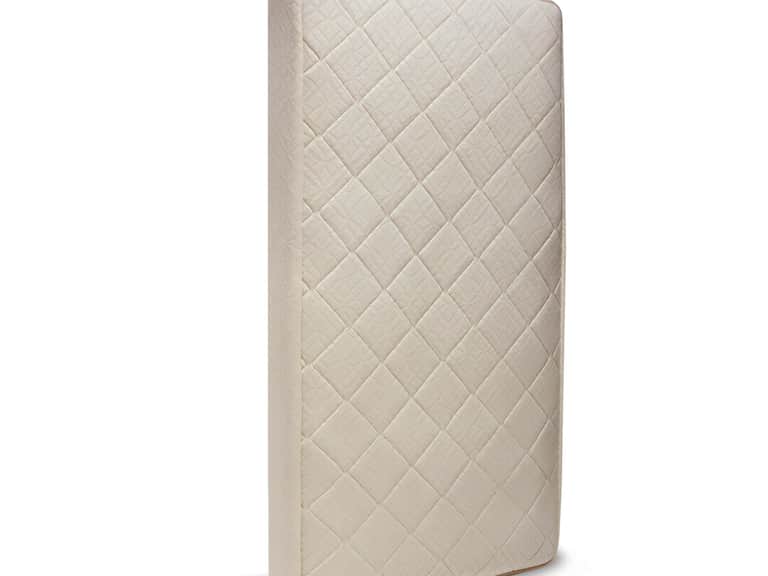
Quilting helps hold batting in place and gives the pad its surface pattern. Stitching, quilted squares, channels, or other designs can affect how evenly the fill is distributed. A well-secured fill is less likely to shift into uneven bunches during use, though laundering and product construction still matter. Read the care instructions and reviews, where available, for clues about how the pad behaves over time.
Percale, sateen, and other cotton covers
The cover may be described by its weave. Percale is commonly associated with a crisp, matte hand, while sateen tends to feel smoother and may have a gentle sheen. These descriptions can help set expectations, but the finished feel also depends on the yarn, fabric weight, and quilting. Thread count is not a complete measure of quality; it should be considered alongside fiber content, weave, construction, and the clarity of the product specifications.
Breathability is often part of cotton’s appeal, but no single fiber label guarantees that a bed will feel cool. The overall experience depends on the mattress, sheets, room temperature, sleepwear, and personal preferences as well as the pad. If temperature is a priority, look for straightforward material and construction details instead of treating a “cooling” claim as a promise of a particular result.
Understand what organic certification does—and doesn’t—say
“Organic cotton” describes the fiber’s agricultural origin, but shoppers may want independent verification of how a product or its materials were handled. One certification commonly encountered in bedding is GOTS, short for the Global Organic Textile Standard. Its scope includes requirements for organic textile processing and other environmental and social criteria across certified stages of production. The exact details depend on the certification and the product claim, so it is worth reading the label rather than relying on a logo alone.
Look for the name of the standard, the scope of the claim, and, where provided, certification or licensing information. A statement that a product contains organic cotton is not necessarily the same as a statement that the finished textile product is certified. If a label is vague, ask what part of the pad is certified: the batting, the cover, or the finished product. A credible seller should be able to explain the claim in plain language.
Certification is useful evidence, but it does not answer every question a shopper might have. It does not by itself tell you whether a pad will feel soft, fit a deep mattress, survive your preferred wash cycle, or meet a particular moisture-protection need. Treat it as one piece of a broader assessment, alongside the bill of materials, manufacturing details, care directions, and fit information.
It also helps to distinguish organic certification from other textile labels. Standards such as OEKO-TEX address different questions from GOTS, and a certification in one area should not be presented as proof of every environmental or health-related claim. When claims sound sweeping, look for specific, verifiable language—and be wary of vague terms such as “chemical-free,” which can be difficult to interpret without context.
Measure carefully: fit is part of comfort
A pad that creeps, pulls at the corners, or creates a lumpy surface can become a nightly annoyance. Before ordering, confirm the mattress size and measure its depth, including any existing topper or layer that will remain beneath the pad. Compare that measurement with the pad’s pocket depth or stated mattress range.
Many pads use elasticized sides or a fitted-sheet-style skirt. Some are designed for a particular maximum mattress depth; others may have a deeper pocket. A generous fit can accommodate a tall mattress, but a loose skirt on a shallow bed may not hold securely. Check whether the manufacturer gives the pad’s dimensions, pocket depth, and mattress-depth guidance. If the product is quilted or has a fitted construction, find out whether the listed measurements refer to the sleeping surface, the full pad, or the pocket.
Also consider what sits underneath. A mattress encasement, topper, or existing protector can add height and affect how the pad fits. If you are layering several pieces, check that the fitted sheet can still reach over all of them without pulling tight. The goal is a smooth, secure surface—not a stack that compromises the fit of the bedding above it.
- Confirm the mattress size rather than relying on memory.
- Measure the full depth, including layers that will remain in place.
- Compare your measurement with the product’s pocket-depth range.
- Check whether the pad is intended for a standard mattress, a deep mattress, or both.
- Review return terms in case the fit differs from what you expected.
Be honest about the laundry routine
A washable pad is only convenient if its care directions fit your home. Check the label before buying: some cotton pads can be machine washed, while others require more careful handling because of their size, quilting, or filling. Pay attention to water temperature, cycle, detergent guidance, bleach restrictions, and drying instructions. A pad that needs a large-capacity washer may be awkward to clean if your machine is small.
Follow the manufacturer’s instructions rather than assuming that all cotton bedding can be treated alike. High heat, aggressive cycles, bleach, or fabric softener may affect the fabric or batting, depending on the product. If the item is pre-shrunk, that is useful information, but it does not replace the care label. Some products may recommend washing before use; others may advise against frequent laundering.
Drying deserves special attention. A thick or quilted pad may take longer to dry than a sheet, and dampness trapped in dense layers can be a concern. Use the method and heat level specified by the manufacturer, and make sure the pad is fully dry before returning it to the bed. If you do not have suitable laundry equipment, consider whether a washable protector or a different, easier-care layer would better meet your needs.
For small marks, spot-cleaning may be appropriate if the care directions allow it. Avoid improvising with harsh cleaners or soaking a product that is not designed for that treatment. Keeping the sheet clean and changing it regularly can also reduce how often the pad itself needs laundering. The best option is not necessarily the one with the most elaborate care routine; it is the one you can maintain as intended.
Know the limits of a cotton pad
Organic cotton can be a comfortable choice, but material preferences are personal. Cotton may not provide the same buoyancy or cushioning as a thick foam topper, and a standard quilted pad should not be expected to correct a mattress that feels too firm, too soft, or unsupportive. If you want a significant change in pressure relief or mattress feel, compare products made for that purpose and consider how they affect the overall bed height and support.
Likewise, “breathable” is not synonymous with waterproof. A cotton fill and cover may absorb liquid rather than block it. If protection from spills is important, seek an explicit description of a waterproof or water-resistant layer and understand what materials provide that barrier. Weigh that need against your preferences for texture, noise, washing, and airflow; constructions vary, and labels should explain the product rather than leave you to infer it.
Those with allergies or sensitivities should review the full materials and care information, but a product’s fiber content alone cannot guarantee how an individual will respond. If you have a medical concern, consult a qualified health professional. For household decisions, prioritize accurate ingredient and construction details, clear cleaning guidance, and a return policy that gives you room to assess the product at home.
Consider durability and the whole bedding system
A mattress pad is one layer in a larger system. Its usefulness depends partly on how it works with the mattress, fitted sheet, and any other bedding you use. A very thick pad can change how the mattress feels and may require deeper sheets. A thin one may preserve the original feel but offer only modest cushioning. There is no universal ideal thickness; the right balance depends on your priorities and the dimensions of your bed.
Look for construction details that suggest the product is designed for regular use: secure quilting, durable elastic or skirt construction, and care instructions that are specific rather than generic. No description can guarantee a particular lifespan, but transparent details make it easier to judge whether the pad suits your expectations. If a warranty is offered, read what it covers and what it excludes. A warranty should not be confused with a promise that the pad will remain unchanged indefinitely.
From a sustainability perspective, buying a layer that fits and can be cared for properly may be more practical than replacing a poorly chosen one. Durability is influenced by use, washing, and construction. Keep the product information for reference, follow care directions, and avoid buying more features than your household needs. A simpler pad that does its job and fits your routine can be a better choice than an elaborate one with claims you cannot verify.
A quick checklist before you choose
When product pages start to blur together, return to the essentials. A few minutes spent checking the specifications can make the decision feel less like a guessing game.
- Purpose: Decide whether you want light cushioning, a washable surface layer, moisture protection, or a combination.
- Materials: Confirm the fill and cover separately, including whether each is cotton and whether the cotton is identified as organic.
- Certification: Look for the certification name and clarify whether it applies to the finished product or a particular component.
- Construction: Review quilting, fill distribution, finished thickness, and how the pad stays in place.
- Fit: Measure your mattress with any layers that will remain underneath, then compare the result with the stated pocket depth.
- Care: Check washing and drying instructions against your available laundry equipment and routine.
- Claims: Separate specific, verifiable statements from broad promises about cooling, protection, or environmental impact.
- Practical details: Review shipping, returns, warranty terms, and any notes about expected shrinkage or washing before use.
The bottom line
An organic cotton mattress pad can be a simple way to add a breathable-feeling, washable layer to your bed while helping reduce everyday wear on the mattress surface. The most satisfying choice is rarely determined by one attractive claim. It comes from matching the pad’s construction to the job, confirming the certification details, measuring for a secure fit, and choosing care instructions you can realistically follow.
Start with the practical questions: What do you want the pad to change? Does it use cotton in the fill, the cover, or both? How deep is your mattress once all the layers are in place? Can you wash and dry the pad as directed? When those answers are clear, the label becomes more than a collection of reassuring words. It becomes a useful guide to a bedding layer that can quietly earn its place in your everyday routine.